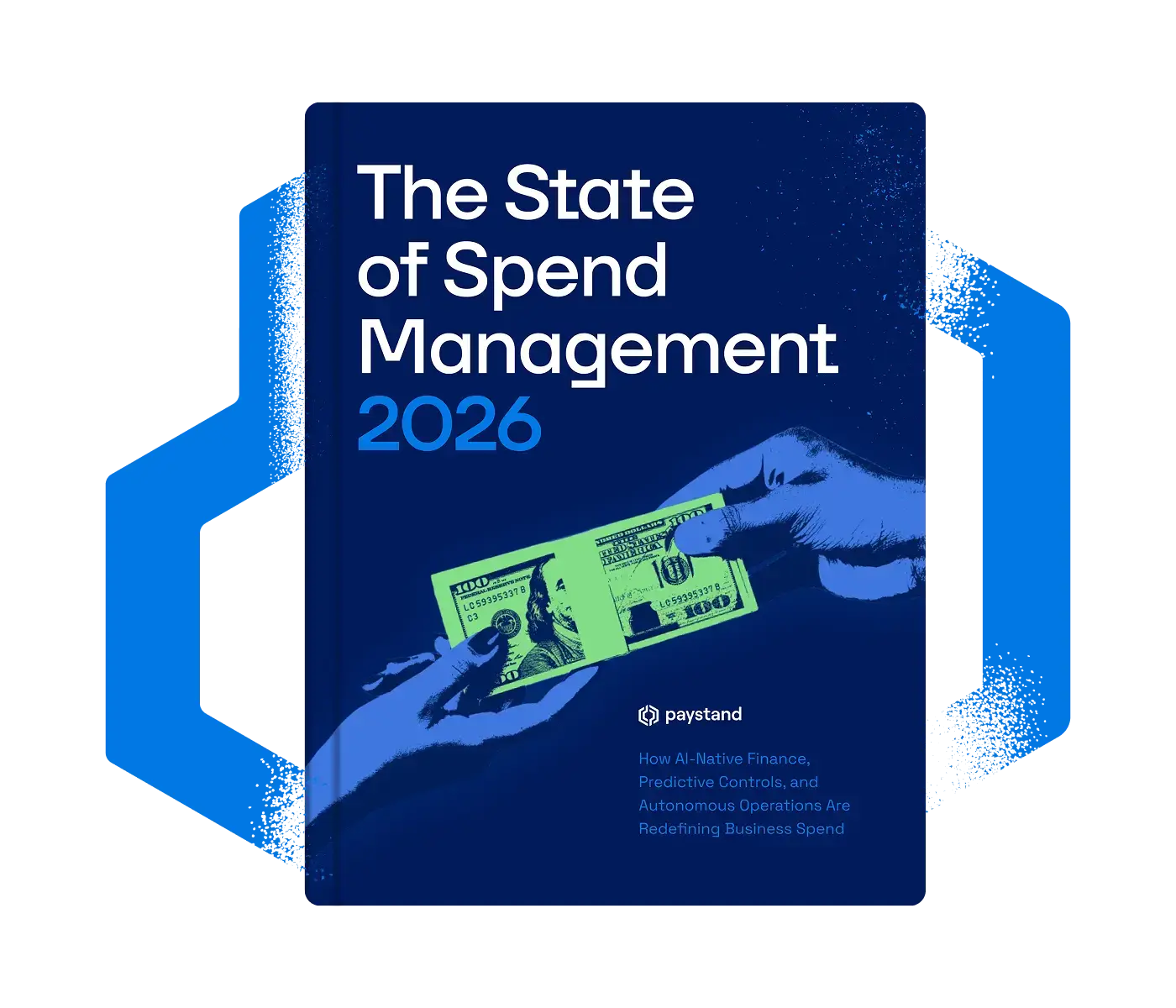
eBook
Spend Management Is Broken. Here's the Data.
AI-Native Finance, Predictive Controls, and Autonomous Spend, Built for the Year Ahead
Most finance teams still rely on disconnected approvals, manual processes, and incomplete visibility into committed spend. The result: budget overruns, late payments, and a CFO flying blind.
The State of Spend Management surfaces the benchmarks finance leaders need to close the gap — and shows what high-performing teams are doing differently.
Why It Matters Now:
Despite significant ERP investment, most finance teams still cannot access real-time committed spend data without a manual process. Approval bottlenecks are the leading cause of late vendor payments and cash flow unpredictability. And finance teams without automation consistently close 30–40% slower than those that have invested in workflow automation.
This whitepaper documents the problem with data — and maps the path forward.
What you'll learn
- The top spend management pain points reported by CFOs and controllers
- Why most companies still lack real-time committed vs. approved spend visibility
- How automation is closing the gap between spend policy and spend reality
- Benchmarks for approval workflows, payment cycle times, and exception rates
- How ERP-native spend management outperforms bolt-on point solutions
Key Findings
Visibility Is the #1 Gap
Most finance teams still cannot see committed spend in real time without a manual pull. This leads to reactive budget management and forecast inaccuracy.
Manual Approvals Drive Delay and Risk
Approval chains running through email create exceptions that go unnoticed, payment delays that strain suppliers, and reconciliation waste at close.
AI Is Emerging as the Differentiator
Top-performing teams are deploying AI to flag anomalies, enforce policy limits, and surface savings — before they're missed.
How Paystand Helps
Paystand's ERP-embedded automation gives finance teams real-time spend visibility, automated approval workflows, and payment execution built directly into NetSuite, Dynamics 365, Acumatica, and Sage Intacct.
Teams using Paystand report reduced DSO, lower transaction fees, and faster close — without adding headcount.