












paystand symbol white logoAR + PAYMENTS
|
AP + EXPENSE
|
LATAM AR + AP
|
FX + PAYOUTS
|
.org
  • Receivables

    ACCOUNTS RECEIVABLES

    • Automatic Reconciliation
    • Collections Automation
    • Payment Portal
    • Convenience Fees & Incentives
    • Billing & Receivables Automation
    • Dashboard & Reporting
    • NetSuite NetSuite
    • Sage Intacct Sage Intacct
    • Dynamics 365 Dynamics 365
    • Acumatica Acumatica
    • Adobe Commerce Adobe Commerce
    • BigCommerce BigCommerce
    • Woo Commerce Woo Commerce
    • Xero Xero
    • All Integrations All Integrations
  • Payables

    ACCOUNTS payables

    • AP Automation
    • Accounting Automation
    • International Payments
    • Purchase Order Approvals & Spend Approvals
    • Customer Portal

    WHY NOW

    Our push into Accounts Payables comes with our mission of becoming the one stop shop for the CFO.

    By integrating AP, our financial suite becomes even more powerful as we aim to automate everything money.

  • Payments

    OUR NETWORK

    Discover how we enable your business to receive fee-less payments at a faster speed than your current solution.

    We transition your costliest payers into cost-effective payment rails to return the most positive of ROIs.

    OVERVIEW

    • B2B Payments
    • Paystand Bank Network
    • Check Scan
    • eCheck and ACH
    • Smart Lockbox
    • Canadian EFT
    • Push Payments (AI Match)
  • Expense

    EXPENSE

    • Spend Management
    • Corporate Cards
    • Procurement
    • Spend Analytics
    • Slack Slack
    • Microsoft Teams Microsoft Teams
    • Quickbooks Online Quickbooks Online
    • NetSuite NetSuite
    • Sage Intacct Sage Intacct
    • Microsoft Dynamics 365 Microsoft Dynamics 365
    • All Integrations All Integrations
  • Resources
    • Blog
    • Case Studies
    • Glossary
    • Podcast
    • Events
    • Webinars
    • Datasheets
    • eGuides

    INDUSTRIES

    • Healthcare
    • Manufacturing
    • Construction
    • Supply Chain
    • Solar Energies
    • Retail
    • Wholesale

    DATA & INFRASTRUCTURE

    • Enterprise Blockchain
    • APIs

    LEARNING RESOURCES

    • Improving Cash Flow
    • Optimizing AR
    • Reducing Costs
    • Bitcoin at Paystand
  • Company

    Company

    Paystand is revolutionizing B2B payments with a modern infrastructure built as a SaaS on the blockchain, enabling faster, cheaper, and more secure business transactions.

    Our mission is to reboot commercial finance by creating an open financial system.

    Payments as a Service

    PARTNERS

    Join Paystand's partnership program today.

    Become a Partner

    PRESS

    Read about Paystand business updates and technology announcements.

    Read About Paystand

    CAREERS

    Join our fast-growing team of disruptors and visionaries.

    Grow With Paystand

    ABOUT US

    See how we are rebooting commercial finance.

    Learn About Our Mission

    Where We Operate

    United states

    USAPaystand is headquartered in California and operates nationwide, serving businesses across all 50 states.


    canada

    CANADAWe support operations in Canada with localized payment capabilities, including CAD EFT and cross-border support.

Bitcoin
Get Started
  • Login
  • Receivables
    • Automatic Reconciliation
    • Collections Automation
    • Payment Portal
    • Convenience Fees and Incentives
    • Billing & Receivables Automation
    • Dashboard & Reporting
    • NetSuite
    • Sage Intacct
    • Dynamics 365
    • Acumatica
    • Adobe Commerce
    • BigCommerce
    • WooCommerce
    • Xero
    • All Integrations
  • Expenses
    • Spend Management
    • Corporate Cards
    • Procurement
    • Spend Analytics
    • Slack
    • Microsoft Teams
    • Quickbooks Online
    • NetSuite
    • Sage Intacct
    • Microsoft Dynamics 365
    • All Integrations
  • Payables
    • AP Automation
    • Accounting Automation
    • International Payments
    • Purchase Order Approvals & Spend Approvals
    • Customer Portal
  • Payments
    • B2B Payments
    • Paystand Bank Network
    • Check Scan
    • eCheck and ACH
    • Smart Lockbox
    • Canadian EFT
    • Push Payments: AI Match
  • Resources
    • Blog
    • Case Studies
    • Datasheets
    • eGuides
    • Events
    • Webinars
    • Glossary
    • Podcasts
    • Improving Cash Flow
    • Optimizing AR
    • Reducing Costs
    • Bitcoin at Paystand
    • The Future of Finance - Get Your Copy
    • Enterprise Blockchain
    • APIs
  • Industries
    • Healthcare
    • Manufacturing
    • Construction
    • Supply Chain
    • Retail
    • Solar
    • Wholesale
  • Company
    • Abous Us
    • Payments as a Service
    • Become a Partner
    • Press
    • Careers
  • Login
  • Get Started
Zazil Martinez 01/14/2025
4 Minutes

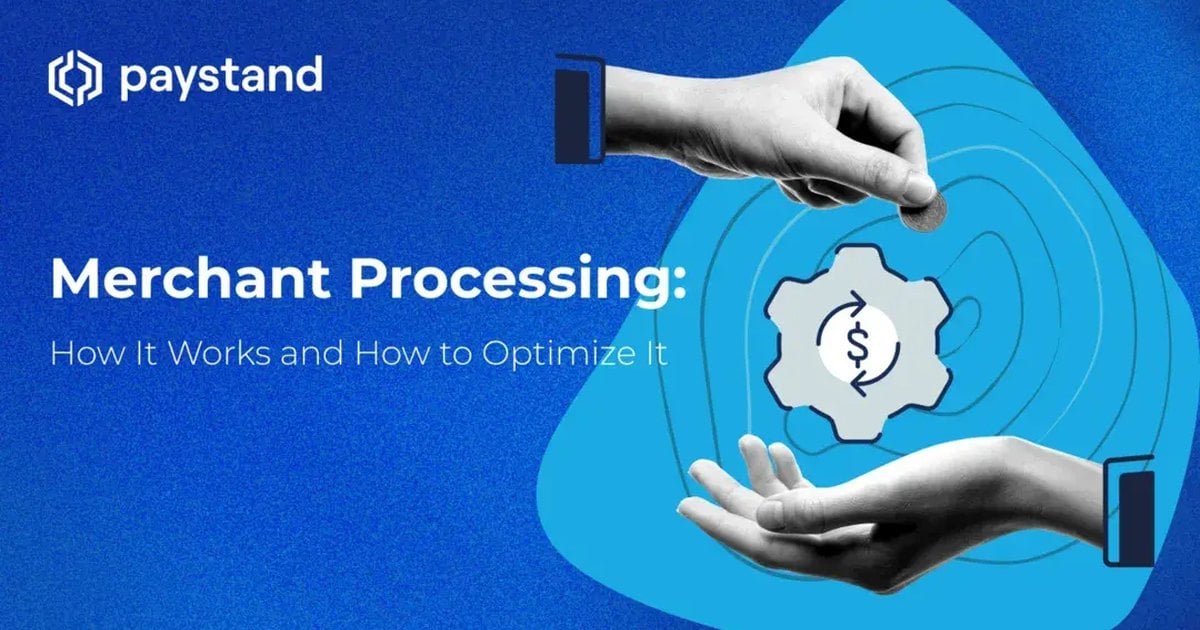
Merchant Processing: How It Works and How to Optimize It

Merchant Processing: How It Works and How to Optimize It

Table of Contents

  1. What is merchant processing?
  2. How merchant processing works
  3. Types of merchant processing solutions
  4. Key players in merchant processing
  5. Costs and fees in merchant processing
  6. Choosing the right merchant processing solution


Key Takeaways

  • Merchant processing powers the secure, seamless flow of digital payments between customers and businesses. It involves multiple financial institutions behind the scenes.
  • Businesses can choose from various merchant processing solutions, including traditional accounts, payment gateways, and payment service providers. Each option offers unique costs, benefits, and complexities, empowering businesses to select the solution that best suits their needs.
  • When selecting a merchant processing solution, aligning cost structures and technology with business objectives is crucial. This strategic approach can help businesses optimize their payment strategies.
  • Innovative platforms like Paystand offer a subscription-based, no-transaction-fee model, transforming payment processing into a predictable, profit-driving solution.


Have you considered what happens after clicking “Pay Now” or using your card at checkout? Behind that moment lies a web of technology and financial partnerships working together to complete your transaction. Merchant processing is key in business financial management, ensuring payments flow from customer to business with speed, security, and precision. This simplicity masks the intricate machinery powering each step—from authorization and settlement to the merchant fees impacting your bottom line.

Understanding merchant processing is crucial for any business accepting payments. What drives this process, and how do you choose a payment solution that reduces fees and boosts profitability? Let’s explore key elements, important players, and cost-saving strategies to transform payment processing into a profit engine. Ready to dive in? Let’s begin.


What Is Merchant Processing?

Merchant processing is vital for businesses to handle digital payments. It accepts credit, debit, and ACH payments, ensuring secure and efficient transactions. When a customer swipes a card or clicks "Pay Now," various systems and financial institutions work together to verify the payment, transfer funds, and ensure security for both parties.

Merchant processing involves a payment processor, an acquiring bank, and issuing banks transferring funds from the customer to the business. The simplicity for the end user hides the complex machinery behind these financial exchanges.
New call-to-action

How Merchant Processing Works

Merchant processing follows a structured workflow that involves multiple parties coordinating to authorize, route, and settle payments. Here’s a closer look at how the process unfolds:

When a customer makes a payment—online or in person—their details are captured by a POS system or gateway. This data is encrypted and sent to a processor managing the transaction flow. The processor routes the information to the card network (like Visa or Mastercard), which contacts the issuing bank. The bank checks funds or credit before approving or declining the transaction transaction.

If approved, the process moves to settlement and funding, transferring funds from the customer’s bank to the merchant’s account. However, businesses don’t receive the full amount; fees are deducted at multiple stages, varying by transaction type and payment processor structure.


Types of Merchant Processing Solutions

Choosing the right merchant processing service is critical for businesses that aim to manage costs and optimize payment acceptance. The landscape offers various options, each suited to different business models, allowing you to select the solution that best aligns with your business goals and needs.


Traditional Merchant Account Providers

Traditional merchant accounts provide a dedicated account through which payments are processed. Businesses enter into agreements with acquiring banks or independent processors to handle transactions. These accounts are typically favored by larger organizations or companies processing high payment volumes, as they offer more tailored rates and services. However, they often involve setup fees, monthly minimums, and stringent approval processes.


Payment Gateways

A payment gateway is a digital equivalent of a POS terminal for online payments. It captures and encrypts customer payment information before transmitting it to a processor. Payment gateways bridge the website and the banking system, ensuring security and data integrity.


Payment Service Providers (PSPs)

PSPs like Stripe, Square, and PayPal simplify payment processing by aggregating multiple merchants under a shared account. Their ease of setup and transparent pricing models make them popular with small businesses. However, this convenience has trade-offs, including higher per-transaction fees than dedicated merchant accounts. PSPs handle all aspects of payment processing, from authorization to settlement, eliminating the need for separate agreements with acquiring banks.


Options vary by business size, sales volume, payment preferences, and technical complexity. Enterprises prioritize lower transaction fees, while smaller companies value simplicity and quick onboarding.


Key Players in Merchant Processing

Merchant processing involves a complex network of participants, each with a specific role in ensuring payments are completed accurately and securely:

  • Merchants: Businesses selling goods or services.
  • Customers: Individuals or entities providing payment information.
  • Issuing Banks: The banks that issue credit or debit cards to customers.
  • Acquiring Banks: Financial institutions that partner with merchants to process payments.
  • Payment Processors: Companies that handle transaction routing, authorization, and settlement.

Each participant plays a distinct role, yet their cooperation is essential to maintain the integrity and fluidity of the payment ecosystem.


Costs and Fees in Merchant Processing

The cost structure is one of the most critical business considerations when choosing a processing service. Understanding the components of these costs is key to selecting the most cost-effective solution. This knowledge empowers you to make informed decisions that significantly impact your profit margins.


Transaction Fees

Every card transaction carries a fee, typically expressed as a percentage of the sale plus a flat fee (e.g., 2.9% + $0.30 per transaction). This fee compensates the payment processor, acquiring bank, and card network. Rates can vary based on the type of card used (credit vs. debit) and the sales channel (in-person vs. online).


Interchange Fees

Set by card networks, interchange fees cover the cost of transferring funds and managing transaction risk. These fees are non-negotiable and vary based on the type of transaction and card.


Monthly and Setup Fees

Some traditional merchant accounts charge setup fees and monthly minimums, which can add up for smaller businesses. In contrast, many PSPs offer pay-as-you-go pricing with no monthly fees.


Chargeback Fees

When a customer disputes a charge, the business may incur a chargeback fee, typically between $10 and $50. Effective dispute management can help reduce chargeback costs, but businesses should prioritize robust fraud prevention strategies.

Smarter Spend. Stronger Cash Flow.

Choosing the Right Merchant Processing Solution

Selecting the right processing solution is more than a financial decision; it’s about aligning payment technology with business goals. Companies seeking a scalable, cost-effective platform often use solutions emphasizing automation and transparency. Paystand, for instance, offers an innovative approach by eliminating per-transaction fees in favor of a flat-fee, subscription-based model. This provides businesses with predictable costs and increased profitability.

Understanding the intricacies of merchant account processing, evaluating the available services, and carefully processing a merchant account application can help businesses optimize their payment strategies for long-term growth. By leveraging the right technology and fee structure, businesses can transform payment processing from a cost center into a competitive advantage.

Transform your payment processing from a cost center into a profit driver. Book a demo with Paystand today to learn how.


Written by Zazil Martinez

10 years of content creation for digital platforms, as well as a creative lead for advertising, marketing campaigns, and copywriting

Share:

  • Follow us on Facebook
  • Follow us on Twitter
  • Follow us on Linkedin
  • Follow us on Pinterest

What Is Remittance Advice? Simplify Payment Communication

Previous Post

The Ultimate Guide to Enterprise Payment Processing

Next Post
  • There are no suggestions because the search field is empty.

Subscribe Here!

Category

  • B2B Payments (112)
  • AR Optimization (96)
  • AR Automation (93)
  • Payment Processing (72)
  • Billing & Invoicing (71)

Popular Posts

Zazil Martinez 08/22/2024
What Is a TID Number? The Key to Secure Transactions
Analisa Flores 03/12/2025 Smart Lockbox
What is a Bank Lockbox Service and How is it Used for Payments?
Zazil Martinez 02/27/2025 B2B Payments, Billing & Invoicing, AR Optimization, AR Health
How to Improve Your Financial Decision Making?
Zazil Martinez 07/15/2024 Credit Cards
What is a Credit Card Hold? A Closer Look

Related Posts

AR Health
Analisa Flores 04 December, 2025

Why the Year-End Close Matters for Your Business

Table of Contents Step 1: Gather and Organize Financial Documents Step 2: Reconcile Accounts and…

Read This Article
Paystand News & Culture, AR Health
Analisa Flores 03 December, 2025

Paystand Recognized in G2 Winter 2026 Reports

Read This Article
AR Health
Analisa Flores 10 November, 2025

Financial Strategy: How FP&A Drives Smarter, Data-Driven Business Decisions

Table of Contents

Read This Article

Paystand is on a mission to create a more open financial system, starting with B2B payments. Using blockchain and cloud technology, we pioneered Payments-as-a-Service to digitize and automate your entire cash lifecycle. Our software makes it possible to digitize receivables, automate processing, reduce time-to-cash, eliminate transaction fees, and enable new revenue.

  • Receivables
    • Automatic Reconciliation
    • Collections Automation
    • Payment Portal
    • Convenience Fees and Incentives
    • Billing & Receivables Automation
    • Dashboard & Reporting
    • NetSuite
    • Sage Intacct
    • Dynamics 365
    • Acumatica
    • Adobe Commerce
    • BigCommerce
    • Woo Commerce
    • Xero
    • All Integrations
  • Payables
    • AP Automation
    • Accounting Automation
    • International Payments
    • Purchase Order Approvals & Spend Approvals
    • Customer Portal
  • Legal
    • Privacy Policy
    • Terms of Service
  • Support
    • Knowledge Base
    • Developer Hub
  • Payments
    • B2B Payments
    • Paystand Bank Network
    • Check Scan
    • eCheck and ACH
    • Smart Lockbox
    • Canadian EFT
    • Push Payments: AI Match
  • Expense
    • Spend Management
    • Corporate Cards
    • Procurement
    • Spend Analytics
    • Slack
    • Microsoft Teams
    • Quickbooks Online
    • NetSuite
    • Sage Intacct
    • Microsoft Dynamics 365
    • All Integrations
  • Company
    • About Us
    • Payments as a Service
    • Become a Partner
    • Careers
    • Press
    • Sitemap
  • Resources
    • Blog
    • Case Studies
    • Datasheets
    • eGuides
    • Events
    • Podcast
    • Webinars
    • Glossary
  • INDUSTRIES
    • Healthcare
    • Manufacturing
    • Construction
    • Supply Chain
    • Solar Energies
    • Retail
    • Wholesale
  • DATA & INFRASTRUCTURE
    • Enterprise Blockchain
    • APIs
  • LEARNING RESOURCES
    • Improving Cash Flow
    • Optimizing Accounts Receivable
    • Reducing Costs

© Paystand, Inc. 2025. All Rights Reserved.