











paystand symbol white logoAR + PAYMENTS
|
AP + EXPENSE
|
LATAM AR + AP
|
FX + PAYOUTS
|
.org
  • Receivables

    ACCOUNTS RECEIVABLES

    • Automatic Reconciliation
    • Collections Automation
    • Payment Portal
    • Convenience Fees & Incentives
    • Billing & Receivables Automation
    • Dashboard & Reporting
    • NetSuite NetSuite
    • Sage Intacct Sage Intacct
    • Dynamics 365 Dynamics 365
    • Acumatica Acumatica
    • Adobe Commerce Adobe Commerce
    • BigCommerce BigCommerce
    • Woo Commerce Woo Commerce
    • Xero Xero
    • All Integrations All Integrations
  • Payables

    ACCOUNTS payables

    • AP Automation
    • Accounting Automation
    • International Payments
    • Purchase Order Approvals & Spend Approvals
    • Customer Portal

    WHY NOW

    Our push into Accounts Payables comes with our mission of becoming the one stop shop for the CFO.

    By integrating AP, our financial suite becomes even more powerful as we aim to automate everything money.

  • Payments

    OUR NETWORK

    Discover how we enable your business to receive fee-less payments at a faster speed than your current solution.

    We transition your costliest payers into cost-effective payment rails to return the most positive of ROIs.

    OVERVIEW

    • B2B Payments
    • Paystand Bank Network
    • Check Scan
    • eCheck and ACH
    • Smart Lockbox
    • Canadian EFT
    • Push Payments (AI Match)
  • Expense

    EXPENSE

    • Spend Management
    • Corporate Cards
    • Procurement
    • Spend Analytics
    • Slack Slack
    • Microsoft Teams Microsoft Teams
    • Quickbooks Online Quickbooks Online
    • NetSuite NetSuite
    • Sage Intacct Sage Intacct
    • Microsoft Dynamics 365 Microsoft Dynamics 365
    • All Integrations All Integrations
  • Resources
    • Blog
    • Case Studies
    • Glossary
    • Podcast
    • Events
    • Webinars
    • Datasheets
    • eGuides

    INDUSTRIES

    • Healthcare
    • Manufacturing
    • Construction
    • Supply Chain
    • Solar Energies
    • Retail
    • Wholesale

    DATA & INFRASTRUCTURE

    • Enterprise Blockchain
    • APIs

    LEARNING RESOURCES

    • Improving Cash Flow
    • Optimizing AR
    • Reducing Costs
    • Bitcoin at Paystand
  • Company

    Company

    Paystand is revolutionizing B2B payments with a modern infrastructure built as a SaaS on the blockchain, enabling faster, cheaper, and more secure business transactions.

    Our mission is to reboot commercial finance by creating an open financial system.

    Payments as a Service

    PARTNERS

    Join Paystand's partnership program today.

    Become a Partner

    PRESS

    Read about Paystand business updates and technology announcements.

    Read About Paystand

    CAREERS

    Join our fast-growing team of disruptors and visionaries.

    Grow With Paystand

    ABOUT US

    See how we are rebooting commercial finance.

    Learn About Our Mission

    Where We Operate

    United states

    USAPaystand is headquartered in California and operates nationwide, serving businesses across all 50 states.


    canada

    CANADAWe support operations in Canada with localized payment capabilities, including CAD EFT and cross-border support.

Bitcoin
Get Started
  • Login
  • Receivables
    • Automatic Reconciliation
    • Collections Automation
    • Payment Portal
    • Convenience Fees and Incentives
    • Billing & Receivables Automation
    • Dashboard & Reporting
    • NetSuite
    • Sage Intacct
    • Dynamics 365
    • Acumatica
    • Adobe Commerce
    • BigCommerce
    • WooCommerce
    • Xero
    • All Integrations
  • Expenses
    • Spend Management
    • Corporate Cards
    • Procurement
    • Spend Analytics
    • Slack
    • Microsoft Teams
    • Quickbooks Online
    • NetSuite
    • Sage Intacct
    • Microsoft Dynamics 365
    • All Integrations
  • Payables
    • AP Automation
    • Accounting Automation
    • International Payments
    • Purchase Order Approvals & Spend Approvals
    • Customer Portal
  • Payments
    • B2B Payments
    • Paystand Bank Network
    • Check Scan
    • eCheck and ACH
    • Smart Lockbox
    • Canadian EFT
    • Push Payments: AI Match
  • Resources
    • Blog
    • Case Studies
    • Datasheets
    • eGuides
    • Events
    • Webinars
    • Glossary
    • Podcasts
    • Improving Cash Flow
    • Optimizing AR
    • Reducing Costs
    • Bitcoin at Paystand
    • The Future of Finance - Get Your Copy
    • Enterprise Blockchain
    • APIs
  • Industries
    • Healthcare
    • Manufacturing
    • Construction
    • Supply Chain
    • Retail
    • Solar
    • Wholesale
  • Company
    • Abous Us
    • Payments as a Service
    • Become a Partner
    • Press
    • Careers
  • Login
  • Get Started
Analisa Flores 09/18/2024
4 Minutes

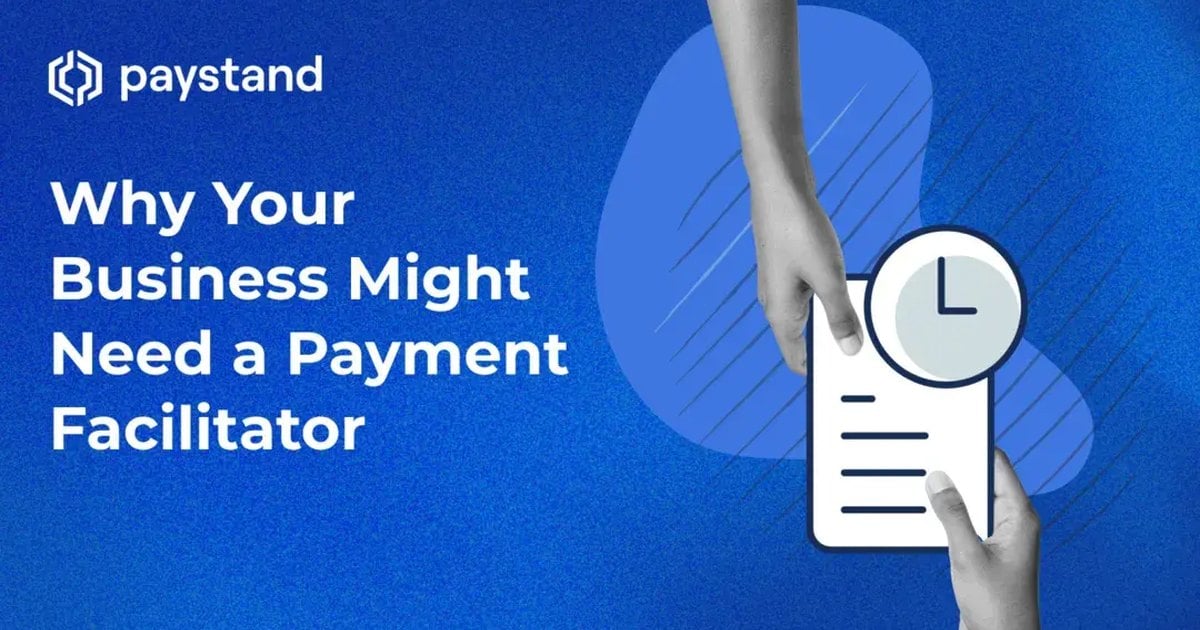
Why Your Business Might Need a Payment Facilitator

Why Your Business Might Need a Payment Facilitator

Table of Contents

  1. What is a Payment Facilitator (PayFac)?
  2. How Do Payment Facilitators Work?
  3. Choosing the right Payment Facilitator
  4. Payment Processor vs. Payment Facilitator
  5. Payment Gateway Vs. a Payment Facilitator

Key Takeaways

  • Payment Facilitators Simplify Transactions: They allow sub-merchants to accept card payments without needing a direct relationship with an acquiring bank.
  • Risk and Responsibility: Payment facilitators assume greater financial risk on behalf of sub-merchants, while payment processors transfer risk directly to merchants.
  • Higher Fees, Higher Value: While payment facilitators often charge higher fees, they offer more streamlined services, particularly for businesses that don’t have access to a traditional merchant account.
  • Compliance and Security: Payment facilitators must maintain high-security standards, including PCI DSS certification, to operate and mitigate risks.
  • Choosing the Right Model: Businesses must weigh the trade-offs between the simplicity and support of a payment facilitator versus the lower fees and greater control offered by a payment processor.


What is a Payment Facilitator (Payfac)?

A payment facilitator (a PayFac) is a type of payment infrastructure that allows sub-merchants to accept credit and debit , and digital payments. A sub-merchant is similar to a merchant and can either be a physical retail location that wants to accept card transactions or an online business that wants to accept this type of transaction.

A payment facilitator’s job is to underwrite and onboard sub-merchants and equip them with the necessary technology to process digital transactions, including access to merchant accounts. Businesses partner with payment facilitators because they help create a more streamlined customer payment experience while optimizing the seller side's efficiency. Essentially, they’re an important part of making the payment processing system easier for businesses—especially if these businesses don’t have access to a merchant account themselves.
New call-to-action

Examples of Payment Facilitators

Some notable examples of PayFacs include:

  1. PayPal: Online payment pioneer for personal and business use
  2. Venmo: Popular for peer-to-peer and now business transactions
  3. Shopify Payments: Integrated solution for e-commerce retailers
  4. Square: Point-of-sale specialist for small businesses and mobile vendors
  5. Stripe: Developer-friendly platform powering online payments

These PayFacs enable businesses to quickly start accepting payments without traditional merchant accounts, streamlining the process of launching and scaling in the digital economy.

How Do Payment Facilitators Work?

For a payment facilitator to work correctly, they must enter into an agreement with a merchant acquirer – e.g., an acquiring bank or payment institution holding their merchant account. The acquiring bank must be licensed by the card networks so that the sub-merchant can receive the funds from its customers. It’s important to note that the acquiring bank is responsible for assuming the risk of the payment facilitator, so the acquiring bank has to ensure the payment facilitator has all the necessary infrastructure, technology, security, and systems to work correctly.

Merchant acquirers are responsible for monitoring the payment facilitator and ensuring the facilitator complies. These banks are also responsible for other merchant-acquiring activities, such as underwriting and onboarding sub-merchants responsibly.

A payment facilitator removes the need for merchants to establish traditional merchant accounts by using a software provider registered with an acquirer to provide payment services to sub-merchants who use their platform. In this way, the software brand operates as the master merchant account provider and streamlines payments for sub-merchants.

To meet security standards, payment facilitators must be PCI DSS certified by submitting quarterly or annual reports to validate ongoing compliance.

Choosing the right Payment Facilitator

A payment processor does not onboard sub-merchants but acts as the mediator between your business (the merchant) and the financial institutions involved in the payment process. Additionally, payment processors do not assume as much risk as payment facilitators, meaning merchants must take responsibility for potential liabilities. Payment facilitators, however, assume more risk on behalf of their sub-merchants.

If you’re looking for a provider that can assume liabilities associated with underwriting and manage a relationship with an acquiring bank for you, then a payment facilitator makes sense for you and your business. Remember, payment facilitators aggregate all of their sub-merchant's transactions under a single master account, which enables the acceptance of electronic payments without requiring the sub-merchants to select and contract directly with an acquirer.

Therefore, it’s essential to remember that payment facilitators often have higher fees than payment processors. If your business is set up to accept many transactions over time, then a payment facilitator might not be the best fit. You’ll have to decide which type of payment infrastructure is best for you and your business and use this information to see whether or not your company needs a payment facilitator to manage credit and debit card transactions.

Payment Processor Vs. a Payment Facilitator

For businesses to be able to accept credit card payments, they’ll need to enlist a provider that works behind the scenes to process these types of transactions for them. Both payment processors and payment facilitators can be used to make this happen; however, they are often confused with one another even though they both operate very differently.

A payment processor is the mediator between your business and financial institutions, making possible credit and debit card payments. In this model, the merchant directly relates to the acquiring bank.

A payment facilitator onboards sub-merchants and gives them the necessary technology to process credit and debit card payments. Still, the payment facilitator has the primary relationship with the acquiring bank.

Additionally, the underwriting process is different for these two models: in the payment processor model, merchants are underwritten by the acquiring bank, which makes them responsible for any potential risk. As a result, payment processors often offer a larger suite of services and lower fees to counteract the number of liabilities that businesses must assume for working with them. On the other hand, in the payment facilitator model, the acquiring bank underwrites the payment facilitator itself (instead of each merchant individually), and the payment facilitator becomes responsible for all financial risks associated with their sub-merchants.

New call-to-action

Payment Gateway Vs. a Payment Facilitator

A Payment Facilitator (PayFac) and a Payment Gateway serve different but complementary roles in the payment processing ecosystem. A payment facilitator provides a complete infrastructure for sub-merchants, handling underwriting, onboarding, and managing the relationship with acquiring banks. PayFacs assume the financial risk on behalf of their sub-merchants, allowing smaller businesses to process payments without needing their own merchant accounts. In contrast, a payment gateway is a secure technology that facilitates the transfer of payment data between the merchant’s website and the bank. While a gateway ensures transactions are authorized and encrypted, it does not handle onboarding or risk management, which means merchants must work with a separate processor or acquiring bank. In short, a PayFac simplifies the entire payment setup for businesses, whereas a payment gateway focuses solely on secure data transmission during transactions.

Ready to revolutionize your B2B payments? While PayFacs offer streamlined solutions, blockchain technology is the next frontier in secure, efficient transactions. Discover why your business needs blockchain payments – download our free whitepaper now: Learn More About Blockchain Payments for B2B.


author-profile
Written by Analisa Flores

Analisa is a Copywriter at Paystand, focusing on crafting content that supports businesses in optimizing their payment processes through automation and digital solutions.

Share:

  • Follow us on Facebook
  • Follow us on Twitter
  • Follow us on Linkedin
  • Follow us on Pinterest

What is a Custodian in Finance? Roles & Responsibilities

Previous Post

EFT Payments: Understanding Electronic Fund Transfers

Next Post
  • There are no suggestions because the search field is empty.

Subscribe Here!

Category

  • B2B Payments (112)
  • AR Optimization (96)
  • AR Automation (93)
  • Payment Processing (72)
  • Billing & Invoicing (71)

Popular Posts

Zazil Martinez 08/22/2024
What Is a TID Number? The Key to Secure Transactions
Analisa Flores 03/12/2025 Smart Lockbox
What is a Bank Lockbox Service and How is it Used for Payments?
Zazil Martinez 02/27/2025 B2B Payments, Billing & Invoicing, AR Optimization, AR Health
How to Improve Your Financial Decision Making?
Zazil Martinez 07/15/2024 Credit Cards
What is a Credit Card Hold? A Closer Look

Related Posts

Payment Processing
Analisa Flores 12 November, 2025

Payment Processing: The Foundation of Digital Trust & Business Growth

Table of Contents

Read This Article
Payment Processing
Analisa Flores 29 September, 2025

Short Payments: How to Handle, Prevent, and Resolve Them

Table of Contents What Are Short Payments? Why Do Short Payments Occur? How Short Payments Affect…

Read This Article
AR Automation, Payment Processing, AR Optimization, Collections
Vivek Shankar 09 September, 2025

How Accounts Receivable Management Transforms Your Cash Flow from Reactive to Predictive

Table of Contents

Read This Article

Paystand is on a mission to create a more open financial system, starting with B2B payments. Using blockchain and cloud technology, we pioneered Payments-as-a-Service to digitize and automate your entire cash lifecycle. Our software makes it possible to digitize receivables, automate processing, reduce time-to-cash, eliminate transaction fees, and enable new revenue.

  • Receivables
    • Automatic Reconciliation
    • Collections Automation
    • Payment Portal
    • Convenience Fees and Incentives
    • Billing & Receivables Automation
    • Dashboard & Reporting
    • NetSuite
    • Sage Intacct
    • Dynamics 365
    • Acumatica
    • Adobe Commerce
    • BigCommerce
    • Woo Commerce
    • Xero
    • All Integrations
  • Payables
    • AP Automation
    • Accounting Automation
    • International Payments
    • Purchase Order Approvals & Spend Approvals
    • Customer Portal
  • Legal
    • Privacy Policy
    • Terms of Service
  • Support
    • Knowledge Base
    • Developer Hub
  • Payments
    • B2B Payments
    • Paystand Bank Network
    • Check Scan
    • eCheck and ACH
    • Smart Lockbox
    • Canadian EFT
    • Push Payments: AI Match
  • Expense
    • Spend Management
    • Corporate Cards
    • Procurement
    • Spend Analytics
    • Slack
    • Microsoft Teams
    • Quickbooks Online
    • NetSuite
    • Sage Intacct
    • Microsoft Dynamics 365
    • All Integrations
  • Company
    • About Us
    • Payments as a Service
    • Become a Partner
    • Careers
    • Press
    • Sitemap
  • Resources
    • Blog
    • Case Studies
    • Datasheets
    • eGuides
    • Events
    • Podcast
    • Webinars
    • Glossary
  • INDUSTRIES
    • Healthcare
    • Manufacturing
    • Construction
    • Supply Chain
    • Solar Energies
    • Retail
    • Wholesale
  • DATA & INFRASTRUCTURE
    • Enterprise Blockchain
    • APIs
  • LEARNING RESOURCES
    • Improving Cash Flow
    • Optimizing Accounts Receivable
    • Reducing Costs

© Paystand, Inc. 2025. All Rights Reserved.