













paystand symbol white logoAR + PAYMENTS
|
AP + EXPENSE
|
LATAM AR + AP
|
FX + PAYOUTS
|
.org
  • Receivables

    ACCOUNTS RECEIVABLES

    • Automatic Reconciliation
    • Collections Automation
    • Payment Portal
    • Convenience Fees & Incentives
    • Billing & Receivables Automation
    • Dashboard & Reporting
    • NetSuite NetSuite
    • Sage Intacct Sage Intacct
    • Dynamics 365 Dynamics 365
    • Acumatica Acumatica
    • Adobe Commerce Adobe Commerce
    • BigCommerce BigCommerce
    • Woo Commerce Woo Commerce
    • Xero Xero
    • All Integrations All Integrations
  • Payables

    ACCOUNTS payables

    • AP Automation
    • Accounting Automation
    • International Payments
    • Purchase Order Approvals & Spend Approvals
    • Customer Portal

    WHY NOW

    Our push into Accounts Payables comes with our mission of becoming the one stop shop for the CFO.

    By integrating AP, our financial suite becomes even more powerful as we aim to automate everything money.

  • Payments

    OUR NETWORK

    Discover how we enable your business to receive fee-less payments at a faster speed than your current solution.

    We transition your costliest payers into cost-effective payment rails to return the most positive of ROIs.

    OVERVIEW

    • B2B Payments
    • Paystand Bank Network
    • Check Scan
    • eCheck and ACH
    • Smart Lockbox
    • Canadian EFT
    • Push Payments (AI Match)
  • Expense

    EXPENSE

    • Spend Management
    • Corporate Cards
    • Procurement
    • Spend Analytics
    • Slack Slack
    • Microsoft Teams Microsoft Teams
    • Quickbooks Online Quickbooks Online
    • NetSuite NetSuite
    • Sage Intacct Sage Intacct
    • Microsoft Dynamics 365 Microsoft Dynamics 365
    • All Integrations All Integrations
  • Resources
    • Blog
    • Case Studies
    • Glossary
    • Podcast
    • Events
    • Webinars
    • Datasheets
    • eGuides

    INDUSTRIES

    • Healthcare
    • Manufacturing
    • Construction
    • Supply Chain
    • Solar Energies
    • Retail
    • Wholesale

    DATA & INFRASTRUCTURE

    • Enterprise Blockchain
    • APIs

    LEARNING RESOURCES

    • Improving Cash Flow
    • Optimizing AR
    • Reducing Costs
    • Bitcoin at Paystand
  • Company

    Company

    Paystand is revolutionizing B2B payments with a modern infrastructure built as a SaaS on the blockchain, enabling faster, cheaper, and more secure business transactions.

    Our mission is to reboot commercial finance by creating an open financial system.

    Payments as a Service

    PARTNERS

    Join Paystand's partnership program today.

    Become a Partner

    PRESS

    Read about Paystand business updates and technology announcements.

    Read About Paystand

    CAREERS

    Join our fast-growing team of disruptors and visionaries.

    Grow With Paystand

    ABOUT US

    See how we are rebooting commercial finance.

    Learn About Our Mission

    Where We Operate

    United states

    USAPaystand is headquartered in California and operates nationwide, serving businesses across all 50 states.


    canada

    CANADAWe support operations in Canada with localized payment capabilities, including CAD EFT and cross-border support.

Bitcoin
Get Started
  • Login
  • Receivables
    • Automatic Reconciliation
    • Collections Automation
    • Payment Portal
    • Convenience Fees and Incentives
    • Billing & Receivables Automation
    • Dashboard & Reporting
    • NetSuite
    • Sage Intacct
    • Dynamics 365
    • Acumatica
    • Adobe Commerce
    • BigCommerce
    • WooCommerce
    • Xero
    • All Integrations
  • Expenses
    • Spend Management
    • Corporate Cards
    • Procurement
    • Spend Analytics
    • Slack
    • Microsoft Teams
    • Quickbooks Online
    • NetSuite
    • Sage Intacct
    • Microsoft Dynamics 365
    • All Integrations
  • Payables
    • AP Automation
    • Accounting Automation
    • International Payments
    • Purchase Order Approvals & Spend Approvals
    • Customer Portal
  • Payments
    • B2B Payments
    • Paystand Bank Network
    • Check Scan
    • eCheck and ACH
    • Smart Lockbox
    • Canadian EFT
    • Push Payments: AI Match
  • Resources
    • Blog
    • Case Studies
    • Datasheets
    • eGuides
    • Events
    • Webinars
    • Glossary
    • Podcasts
    • Improving Cash Flow
    • Optimizing AR
    • Reducing Costs
    • Bitcoin at Paystand
    • The Future of Finance - Get Your Copy
    • Enterprise Blockchain
    • APIs
  • Industries
    • Healthcare
    • Manufacturing
    • Construction
    • Supply Chain
    • Retail
    • Solar
    • Wholesale
  • Company
    • Abous Us
    • Payments as a Service
    • Become a Partner
    • Press
    • Careers
  • Login
  • Get Started
Zazil Martinez 09/13/2024
3 Minutes

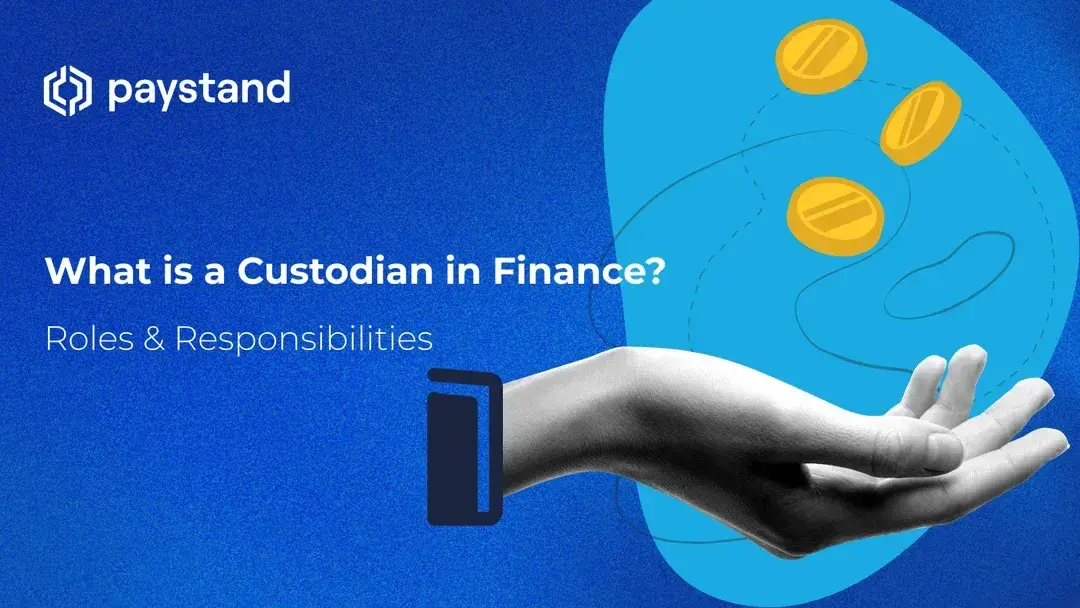
What is a Custodian in Finance? Roles & Responsibilities

What is a Custodian in Finance? Roles & Responsibilities

Table of Contents

  1. What is a custodian in finance?
  2. What is the difference between a custodian bank and a traditional bank?
  3. What is the difference between a custodian bank and a mutual fund custodian?
  4. Why paystand is your go-to solution for finance automation


Key Takeaways

  • A custodian in finance safeguards assets such as physical property, financial assets, and sensitive information.
  • Custodian banks safeguard client assets; traditional banks offer many services, like checking accounts and loans.
  • Custodian banks serve institutional clients and are regulated by the SEC; traditional banks serve individuals and are regulated by the Federal Reserve and FDIC.
  • A mutual fund custodian focuses on mutual fund assets and provides specialized services.


In finance, custodians are critical in safeguarding assets and ensuring compliance with complex regulatory requirements. But what sets a custodian apart from a traditional bank? Why do these specialized institutions matter in the financial landscape? In this guide, we’ll explore the role of custodians and their impact on institutional finance.

Ready to uncover how custodians shape modern business financial management? Keep reading to deepen your understanding of custodianship and why it matters for your financial security.


What is a Custodian in Finance?

A Custodian oversees and safeguards valuable assets, including physical property, financial assets, and sensitive information. Their primary responsibility is to preserve and protect entrusted assets by implementing security measures, maintaining records, and ensuring compliance with legal and regulatory requirements.

What Are the Main Responsibilities of a Custodian?

  • Asset protection: They protect physical assets by developing and implementing security protocols, including monitoring systems, conducting inspections, and controlling access.
  • Financial safeguarding: In financial institutions, they manage and protect client assets, ensuring security and accurate transaction accounting. They may also offer record-keeping, income collection, and tax reporting services.
  • Records management: They keep detailed records of asset transactions for accountability, compliance, and audits.
  • Compliance and regulatory oversight: They follow laws and regulations in asset management, ensuring legal compliance in operations. This includes anti-money laundering measures, client due diligence, and reporting suspicious activities.
  • Risk management: They assess potential risks and develop strategies to minimize their impact on assets.
  • Customer service: They communicate with clients, resolve inquiries, address concerns, and update asset performance. Effective communication channels and prompt responses are essential.
  • Professional development: Custodians must attend seminars, workshops, and conferences to stay current on industry trends, regulations, and technology.
  • Team collaboration: They collaborate with professionals from different departments for efficient asset management and smooth processes.

Bank custodians are regulated by the Office of the Comptroller of the Currency (OCC).
New call-to-action

What is the Difference Between a Custodian Bank and a Traditional Bank?

Custodian Bank

A custodian bank is a financial institution that holds and safeguards client assets. These assets can include securities such as stocks, bonds, mutual funds, cash, and other financial instruments. Custodian banks provide various services, including asset safekeeping, trade execution, settlement, and recordkeeping.

Traditional Bank

A traditional bank is a financial institution providing various banking services to individuals and businesses. These services include checking and savings accounts, loans, and credit cards. Traditional banks also offer investment services like brokerage accounts and financial planning.

💡Key Differences

The key differences between custodian banks and traditional banks include:

  • Services Offered: Custodian banks specialize in holding and safeguarding assets, while conventional banks provide a wider range of banking services.
  • Clientele: Custodian banks typically serve institutional clients, such as investment firms, pension funds, and endowments. Traditional banks serve a broader range of clients, including individuals, businesses, and government entities.
  • Fees: Custodian banks typically charge fees based on the value of assets under custody, while traditional banks charge fees for individual transactions or services.
  • Regulation: Custodian banks are regulated by the Securities and Exchange Commission (SEC), while traditional banks are regulated by the Federal Reserve and the Federal Deposit Insurance Corporation (FDIC).


What is the Difference Between a Custodian Bank and a Mutual Fund Custodian?

Custodian Bank

A custodian bank provides safekeeping and administrative services for assets such as securities, cash, and other valuables. It is typically used by institutional investors, such as mutual, pension, and hedge funds.

Mutual Fund Custodian

A mutual fund custodian provides services specifically tailored to mutual fund needs. They are responsible for holding and safeguarding mutual fund assets and providing various administrative services.

💡Key Differences

The key differences between a custodian bank and a mutual fund custodian are:

  • Scope of services: Custodian banks provide a broad range of safekeeping and administrative services for various assets, while mutual fund custodians focus on servicing mutual funds.
  • Expertise: Mutual fund custodians have specialized knowledge of mutual funds' unique needs, such as regulatory compliance and complex trade execution.
  • Fees: Mutual fund custodians typically charge higher fees than custodian banks due to their specialized services and the high level of security they provide.


What are Some of the Most Well-Known Custodian Banks?

Largest custodian banks in the US:

  • State Street
  • Citigroup
  • Bank of New York (BNY) Mellon
  • JPMorgan Chase

Well-known custodian banks outside the US:

  • Bank of China (China)
  • Credit Suisse and UBS (Switzerland)
  • Barclays (UK)
  • BNP Paribas (France)
  • Deutsche Bank (Germany)

A guide to dominate B2B payments in 2026

Why Paystand is Your Go-To Solution for Finance Automation

Navigating the complexities of asset management and compliance can be daunting, but automation is revolutionizing how businesses handle financial processes. Paystand’s automation solutions simplify asset protection and ensure compliance, freeing custodians and financial professionals to focus on what matters most.

Download our ebook, Why Finance Automation is Good for Your Job, to discover how automation can transform your role and streamline your operations.


Written by Zazil Martinez

10 years of content creation for digital platforms, as well as a creative lead for advertising, marketing campaigns, and copywriting

Share:

  • Follow us on Facebook
  • Follow us on Twitter
  • Follow us on Linkedin
  • Follow us on Pinterest

What Is a Basis Point? Understanding Its Role in Finance

Previous Post

Why Your Business Might Need a Payment Facilitator

Next Post
  • There are no suggestions because the search field is empty.

Subscribe Here!

Category

  • B2B Payments (112)
  • AR Optimization (96)
  • AR Automation (93)
  • Payment Processing (72)
  • Billing & Invoicing (71)

Popular Posts

Zazil Martinez 08/22/2024
What Is a TID Number? The Key to Secure Transactions
Analisa Flores 03/12/2025 Smart Lockbox
What is a Bank Lockbox Service and How is it Used for Payments?
Zazil Martinez 02/27/2025 B2B Payments, Billing & Invoicing, AR Optimization, AR Health
How to Improve Your Financial Decision Making?
Zazil Martinez 07/15/2024 Credit Cards
What is a Credit Card Hold? A Closer Look

Paystand is on a mission to create a more open financial system, starting with B2B payments. Using blockchain and cloud technology, we pioneered Payments-as-a-Service to digitize and automate your entire cash lifecycle. Our software makes it possible to digitize receivables, automate processing, reduce time-to-cash, eliminate transaction fees, and enable new revenue.

  • Receivables
    • Automatic Reconciliation
    • Collections Automation
    • Payment Portal
    • Convenience Fees and Incentives
    • Billing & Receivables Automation
    • Dashboard & Reporting
    • NetSuite
    • Sage Intacct
    • Dynamics 365
    • Acumatica
    • Adobe Commerce
    • BigCommerce
    • Woo Commerce
    • Xero
    • All Integrations
  • Payables
    • AP Automation
    • Accounting Automation
    • International Payments
    • Purchase Order Approvals & Spend Approvals
    • Customer Portal
  • Legal
    • Privacy Policy
    • Terms of Service
  • Support
    • Knowledge Base
    • Developer Hub
  • Payments
    • B2B Payments
    • Paystand Bank Network
    • Check Scan
    • eCheck and ACH
    • Smart Lockbox
    • Canadian EFT
    • Push Payments: AI Match
  • Expense
    • Spend Management
    • Corporate Cards
    • Procurement
    • Spend Analytics
    • Slack
    • Microsoft Teams
    • Quickbooks Online
    • NetSuite
    • Sage Intacct
    • Microsoft Dynamics 365
    • All Integrations
  • Company
    • About Us
    • Payments as a Service
    • Become a Partner
    • Careers
    • Press
    • Sitemap
  • Resources
    • Blog
    • Case Studies
    • Datasheets
    • eGuides
    • Events
    • Podcast
    • Webinars
    • Glossary
  • INDUSTRIES
    • Healthcare
    • Manufacturing
    • Construction
    • Supply Chain
    • Solar Energies
    • Retail
    • Wholesale
  • DATA & INFRASTRUCTURE
    • Enterprise Blockchain
    • APIs
  • LEARNING RESOURCES
    • Improving Cash Flow
    • Optimizing Accounts Receivable
    • Reducing Costs

© Paystand, Inc. 2025. All Rights Reserved.